
Quick Summary
Standard HVAC systems often recirculate harmful pollutants like wildfire ash and mold, making professional air sanitizing from Pure Air Duct Cleaners a technical necessity to stop the recycling of contaminants. Pure Air Duct Cleaners bridges the gap between basic cleaning and medical-grade air sanitizing through an owner-operated model that ensures antimicrobial treatments are applied with safety and precision for commercial environments. Property owners can effectively eliminate persistent odors and biological growth by calling Pure Air Duct Cleaners for a free, no-obligation estimate for commercial air sanitizing services.
Air Sanitizing That Stops Your HVAC From Recycling Pollutants
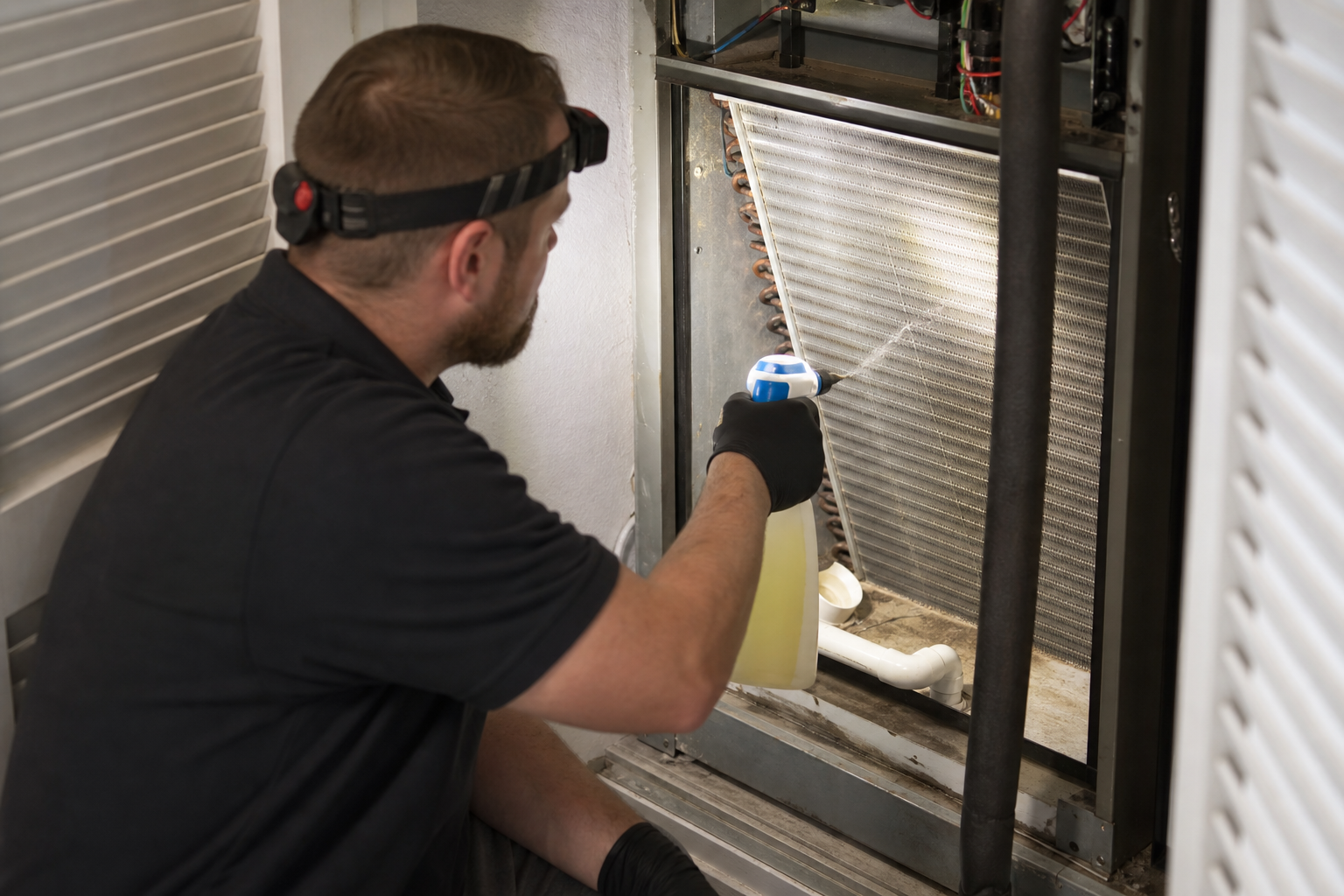
In many Los Angeles homes, the problem is not only what gets into the air, it is what the HVAC system keeps pushing back into the rooms. That is where air sanitizing comes in. It is meant to reduce microbial growth and odor buildup on duct surfaces, coils, and air-handling parts so your system is not recirculating pollutants every time it runs. We see this often in homes affected by wildfire smoke, cooking odors, pet dander, and cannabis residue, where a basic cleaning does not fully solve the issue.
At Pure Air Duct Cleaners, we treat this as a technical service, not a quick spray-and-go job. With owner-on-site oversight, HEPA-filtered Nikro equipment, and professional-grade antimicrobial treatments from Abatement Technologies and Guardsman, the work is done carefully so coverage is even and the results are consistent. That matters because rushed treatment can miss problem areas or leave the system only partly addressed. If you are comparing options, ask for a free, no-obligation estimate for commercial air sanitizing services.
What Air Sanitizing Actually Does – and Why LA Homeowners Need It Now
Air sanitizing is the professional application of antimicrobial treatments inside HVAC components to reduce mold, bacteria, and odor-causing residue that mechanical cleaning can leave behind. It is not a fragrance cover-up. Instead, duct sanitizing is a final step meant to help keep the system from recycling contaminants.
According to GPS Air, over 56% of Americans trust the air in their homes more than in shared spaces. In Los Angeles, that confidence is often tested by wildfire ash, urban smog, and Santa Ana dust. Pure Air Duct Cleaners, an owner-operated company, addresses those conditions directly. On-site technician Larry Torres applies professional-grade Abatement Technologies treatments with the goal of reducing source growth, treating the work as a technical necessity rather than a simple add-on.
| Service Approach | Primary Result |
|---|---|
| Mechanical Cleaning | Removes loose physical debris and dust from ductwork. |
| Air Sanitizing | Reduces biological contaminants, chemical residue, and odors. |
A 2025 study in ScienceDirect found a 90 to 99.99% reduction of cross-contamination on fomites with the use of an air sanitizer spray. When you review the air duct cleaning and sanitizing cost, keep in mind that this final step is often what helps reduce repeated re-contamination.[1]
What Is the Difference Between Air Purification and Air Sanitizing?
What Is the Difference Between Air Purification and Air Sanitizing? Air purification filters particles from the air as it moves through a device, using HEPA media, UV light, or ionization. Air sanitizing treats the interior surfaces of HVAC components, duct walls, coils, and blower housings, with antimicrobial agents that reduce mold, bacteria, and embedded odor sources. Purification catches what floats, sanitizing addresses what clings to the system and can re-enter your airflow.
Air purification filters airborne particles using HEPA media or ionization as air passes through a device. Air sanitizing, by contrast, treats surfaces inside the HVAC system, duct walls, evaporator coils, and drain pans, with antimicrobial agents intended to reduce mold, bacteria, and odor-causing organisms attached to the hardware.
Filtration vs. surface-level treatment: where each method works
| Method | Target Area | Primary Action |
|---|---|---|
| Air Purification | Indoor airspace | Traps floating particles in filters. |
| Air Sanitizing | HVAC surfaces | Reduces bonded residue and bacteria. |
A common misconception is that a standalone purifier solves duct contamination. In Los Angeles, sticky wildfire smoke residue can cling to duct walls and bypass downstream filters. That is why source-level treatment matters. A Sacramento medical center even needed commercial SecureAire particle control technology to stay operational and smoke-free during wildfire season, which shows how serious smoke contamination can become.
Why one without the other leaves gaps in your indoor air quality
According to GPS Air, 41% of Americans say unpleasant odors would keep them from returning to a business, which is higher than the 34% who say the same about a known virus outbreak. Odors cling to surfaces, so standard indoor air quality services often fall short without surface-level antimicrobial treatment.[4]
The decision rule is simple: if you cleaned your ducts but still smell musty or smoky air within days, you may need antimicrobial treatment, not another filter. Reviewing the air duct cleaning and sanitizing cost is worthwhile because treating the source helps reduce pollutant recycling. Knowing your exact air duct sanitizing cost upfront can also keep you from spending more on stand-alone units that only address symptoms.
Does Air Sanitizing Kill Mold and Bacteria in HVAC Systems?
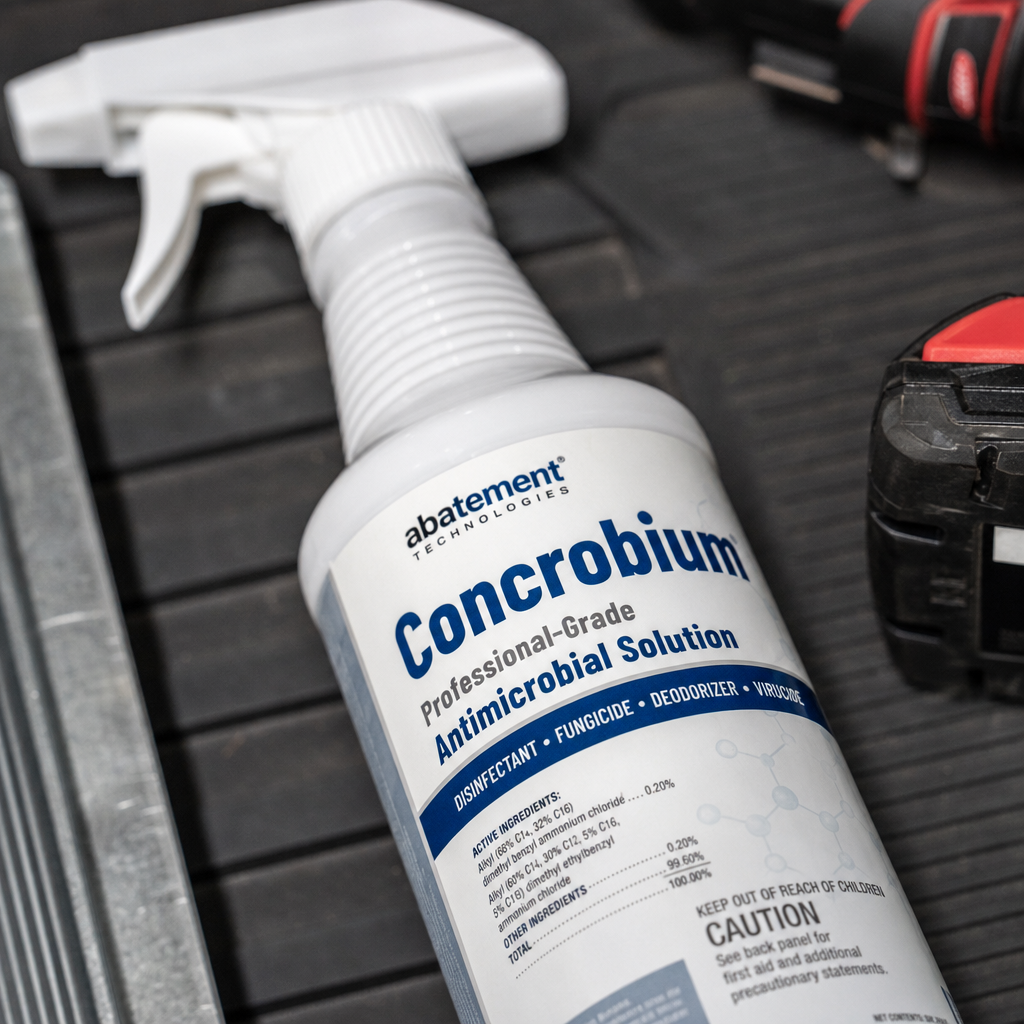
Does Air Sanitizing Kill Mold and Bacteria in HVAC Systems? Professional-grade antimicrobial treatments, such as those from Abatement Technologies and Guardsman, are EPA-registered to kill mold, bacteria, and certain viruses on HVAC surfaces. After mechanical cleaning removes loose debris, the antimicrobial is fogged onto duct walls, coils, and drain pans. These products are formulated for occupied spaces and are safe for children and pets after the recommended dwell time.
Yes, professional duct sanitizing kills mold, bacteria, and certain viruses directly on HVAC surfaces. This helps reduce microbial growth at the source, so your system is less likely to recycle harmful contaminants into your living space.
According to GPS Air, only 9% of Americans believe public spaces have better air systems than their own homes. Proper indoor air quality services can still produce measurable benefits. In a St. Mary’s Hospital case study, advanced air protocols reduced healthcare-associated infections by 45%.[3]
How antimicrobial treatments work inside ductwork
At Pure Air Duct Cleaners, Larry Torres personally oversees every application to help ensure proper dwell times and avoid the rushed work that can happen with franchise crews. The process follows a few clear steps:
- Mechanical Removal: HEPA-filtered Nikro rigs extract loose debris, outperforming standard vacuums.
- Targeted Application: EPA-registered treatments from Abatement Technologies and Guardsman are fogged onto duct walls, coils, and drain pans.
- Chemical Neutralization: The agent breaks down complex contaminants. This is especially relevant for LA properties exposed to resinous smoke from cannabis lounges or pyrotechnic residue from studio backlots.
Is air duct sanitizing safe for pets and children?
Homeowners often weigh safety against the air duct cleaning and sanitizing cost. When applied by trained professionals, these products are formulated for occupied environments and are safe for children and pets after the proper dwell time.
| Approach | Effectiveness | Risk Profile |
|---|---|---|
| Professional | Reduces mold safely. | Safe for occupied homes. Helps justify the air duct sanitizing cost. |
| DIY Sprays | Temporary fragrance. | Can damage duct linings and release harmful fumes. |
How Long Does Professional Air Sanitizing Last – and What Affects It?
How Long Does Professional Air Sanitizing Last – and What Affects It? Professional air sanitizing typically lasts 6 to 12 months. Duration depends on HVAC usage, the quality of the initial duct cleaning, and environmental exposure. In Los Angeles, Santa Ana winds, wildfire ash, and urban pollutants can shorten effectiveness. Re-sanitizing is often recommended after wildfire events, home renovations, or when musty odors return, which can signal that biological growth has returned on duct surfaces.
A professional antimicrobial treatment typically provides effective protection for 6 to 12 months, depending on system usage, environmental conditions, and the quality of the initial mechanical cleaning.
Typical duration of antimicrobial protection
Skipping duct sanitizing may lower the upfront air duct sanitizing cost, but it can also lead to faster re-contamination, especially in older Spanish Colonial and mid-century buildings that may hold moisture in aging ductwork. Consider the tradeoff:
| Service Level | Outcome |
|---|---|
| Mechanical Cleaning Only | Removes loose debris but may leave microscopic spores, increasing the chance of odor return. |
| Cleaning + Professional Sanitizing | Reduces mold and bacteria, helping protect the system for 6 to 12 months. |
LA-specific factors that shorten or extend effectiveness
According to the U.S. EPA, approximately 109 million Americans lived in counties with air quality concentrations above the level of one or more NAAQS in 2024. In Los Angeles, Santa Ana winds can push fine desert particulate into systems, while proximity to busy corridors like the Cahuenga Pass can increase urban pollutant loads. These local conditions can shorten the useful life of any antimicrobial treatment.
When to re-sanitize: after renovations, wildfires, and seasonal shifts
According to GPS Air, 66% of Americans say they are more cautious about indoor air since the pandemic, which shows a shift toward valuing verified indoor air quality services over price alone. Pure Air Duct Cleaners provides transparent, upfront pricing so your air duct cleaning and sanitizing cost is clear, with owner-on-site oversight and HEPA-filtered Nikro rigs. For multi-unit buildings along the Franklin Avenue and Gower Street corridors, property managers should follow this scheduling process:[2]
- Post-Renovation: Sanitize after remodeling projects that create drywall dust or paint fumes, before running the HVAC at full capacity.
- Post-Wildfire: Reduce deposited ash and smoke residue immediately after fire season.
- Annual Maintenance: Complete building-wide sanitizing before yearly insurance inspections to verify system condition.
What Are the Best Methods for Whole-Home Air Sanitizing?
The best methods for whole-home air sanitizing combine heavy-duty mechanical source removal with EPA-registered antimicrobial fogging, targeted evaporator coil treatments, and continuous UV-C light maintenance. Using these methods with professional-grade equipment helps your HVAC system stop recycling pollutants and reduces odors at the source.
Why source removal must come before any sanitizing step
According to the U.S. EPA, approximately 109 million Americans lived in counties with air quality concentrations above the level of one or more NAAQS in 2024. Addressing that environmental load indoors requires real duct sanitizing, not just odor masking. Sanitizing without first removing the source, meaning mechanically cleaning ducts, coils, and blower housings, is like painting over rust. Pure Air Duct Cleaners uses HEPA-filtered Nikro rigs to extract debris before applying professional treatments from Abatement Technologies and Guardsman. This owner-on-site approach helps treatments bond to clean surfaces, unlike budget competitors whose standard commercial vacuums and fragrance sprays can drive up your air duct sanitizing cost without solving the problem.
Comparing fogging, coil treatment, and UV-light systems
| Feature | Antimicrobial Fogging | Coil & Drain Treatment | UV-C Light Systems |
|---|---|---|---|
| Primary Function | Whole-system coating | Targeted moisture control | Continuous maintenance |
| Best For | Duct walls & odors | Evaporator coils | Air handlers |
| Application Phase | Post-cleaning | Post-cleaning | Permanent install |
For effective indoor air quality services, we sequence these methods carefully:
- Antimicrobial fogging: A fine mist of EPA-registered antimicrobial is applied to interior surfaces right after mechanical cleaning.
- Coil and drain pan treatment: Targeted application is used on the evaporator coil and condensate drain pan, where moisture creates a favorable environment for mold and bacteria.
- UV-C germicidal light installation: A permanent fixture inside the air handler that provides continuous, low-level sanitizing as a maintenance layer.
Proper method leads to measurable results, not just a better smell. For example, at a Colorado Cannacraft cannabis facility, a professional air treatment system provided measurable particle count reductions and nearly eliminated complex odors within 24 hours. According to GPS Air, 61% of Americans say they would trust a gym, school, or workplace more if they knew it was actively monitoring indoor air quality. Making sure your total air duct cleaning and sanitizing cost covers these tested, calibrated techniques helps support a healthier environment.[5]
FAQ: Air Sanitizing Questions from LA Homeowners
FAQ: Air Sanitizing Questions from LA Homeowners Air duct sanitizing in Los Angeles typically costs $150 to $400 for residential systems. The price depends on system size, contamination severity, and whether the service includes coil treatment. Professional sanitizing is often recommended after wildfire events, home renovations, or when persistent odors suggest biological growth inside the ductwork. It complements, but does not replace, air purifiers, which filter airborne particles but cannot treat contaminated duct surfaces.
Understanding the air duct cleaning and sanitizing cost helps make sure your HVAC system stops recycling trapped pollutants without stretching your budget. According to GPS Air, 65% of respondents believe businesses should display indoor air quality ratings, and homeowners deserve that same transparency from their indoor air quality services.
- How much is the air duct sanitizing cost? It typically ranges from $150 to $400 based on system size. Pure Air Duct Cleaners provides upfront quotes with no hidden fees.
- Is duct sanitizing worth it after a wildfire? Yes. Wildfire smoke can leave behind resinous particulate that standard cleaning may miss. Antimicrobial fogging helps reduce those embedded odors.
- Can I sanitize ducts myself? DIY sprays can damage linings and introduce unwanted chemicals. Professionals use EPA-registered treatments and calibrated fogging equipment.
- When is sanitizing recommended after renovations? Right after cleanup, before running the HVAC, to reduce circulating drywall dust and paint fumes.
- Do I need it if I have a purifier? Purifiers filter room air but cannot reach contaminated duct surfaces where odors start. Both systems work together.
Stop letting your HVAC system recycle pollutants. Call Pure Air Duct Cleaners for a free, no-obligation estimate. Owner Larry Torres personally answers every call, no scripted call centers, just expert guidance and honest pricing.
Sources
- The impact of an air sanitizer spray on the risk of virus … – pubmed.ncbi.nlm.nih.gov (2025)
- Post-pandemic, an increasing focus on indoor air quality – hsph.harvard.edu (2023)
- 27 Indoor Air Quality Statistics for 2026 – Salas HVAC – salashvac.com (2026)
- 41% of Americans Say Bad Smells Are a Bigger Red Flag Than a Virus Outbreak, GPS Air Survey Finds – finance.yahoo.com (2025)
- 2025 Indoor Air Quality Perception Report – GPS Air – gpsair.com (2025)
Related reading: Indoor Air Quality Services That Fix the Source, Not Just the Symptoms
Related reading: Commercial Air Duct Cleaning Near Me – Cut Risk and Energy Costs
Related reading: Best Duct Cleaning Service Near Me Without Guesswork
Frequently Asked Questions
How often should high-occupancy commercial properties schedule air sanitizing to maintain medical-grade standards?
While residential treatments typically last 6-12 months, Pure Air Duct Cleaners recommends bi-annual sanitizing for high-traffic commercial spaces to counteract constant pollutant loading. Our owner-operated model provides the technical precision needed to ensure antimicrobial applications remain effective against heavy biological and urban debris.
What makes the antimicrobial treatments used by Pure Air Duct Cleaners safer for multi-unit environments than standard franchise sprays?
We use EPA-registered, professional-grade solutions from Abatement Technologies that are specifically formulated for occupied spaces and applied with calibrated HEPA-filtered equipment. This technical approach, overseen directly by our owner, ensures even coverage without the risk of damaging duct linings or leaving harmful chemical residues.
Can air sanitizing eliminate persistent chemical odors from recent renovations or nearby industrial activity in Los Angeles?
Yes, our air sanitizing process uses specialized fogging to neutralize resinous smoke and chemical particulates that bond to HVAC surfaces. Pure Air Duct Cleaners bridges the gap between basic cleaning and medical-grade decontamination, and you can call us for a free, no-obligation estimate for commercial air sanitizing services to address these complex odor profiles.
About the author
 |
Sarah Jenkins Sarah is a certified HVAC technician and indoor air quality specialist with over a decade of experience serving the Los Angeles area. She holds a B.S. in Environmental Science from UCLA and has dedicated her career to educating homeowners on the importance of duct maintenance and system efficiency. Her writing focuses on practical, cost-effective solutions for improving residential air quality and extending the life of HVAC systems. |
Dusty vents or weak airflow at home?
We’re available now — call for a fast, free estimate.
Call Now - Free EstimateNeed Air Duct Cleaning Help?
Call Pure Air Duct Cleaners — licensed & insured, here with fast after-hours help in West Hollywood.
(844) 734-2955