
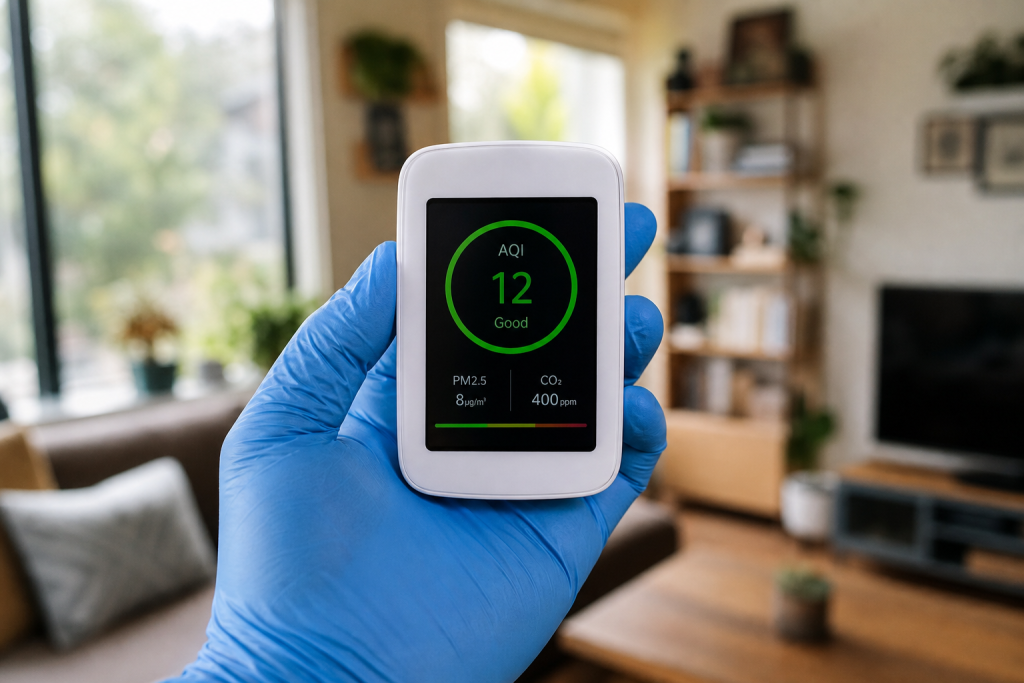
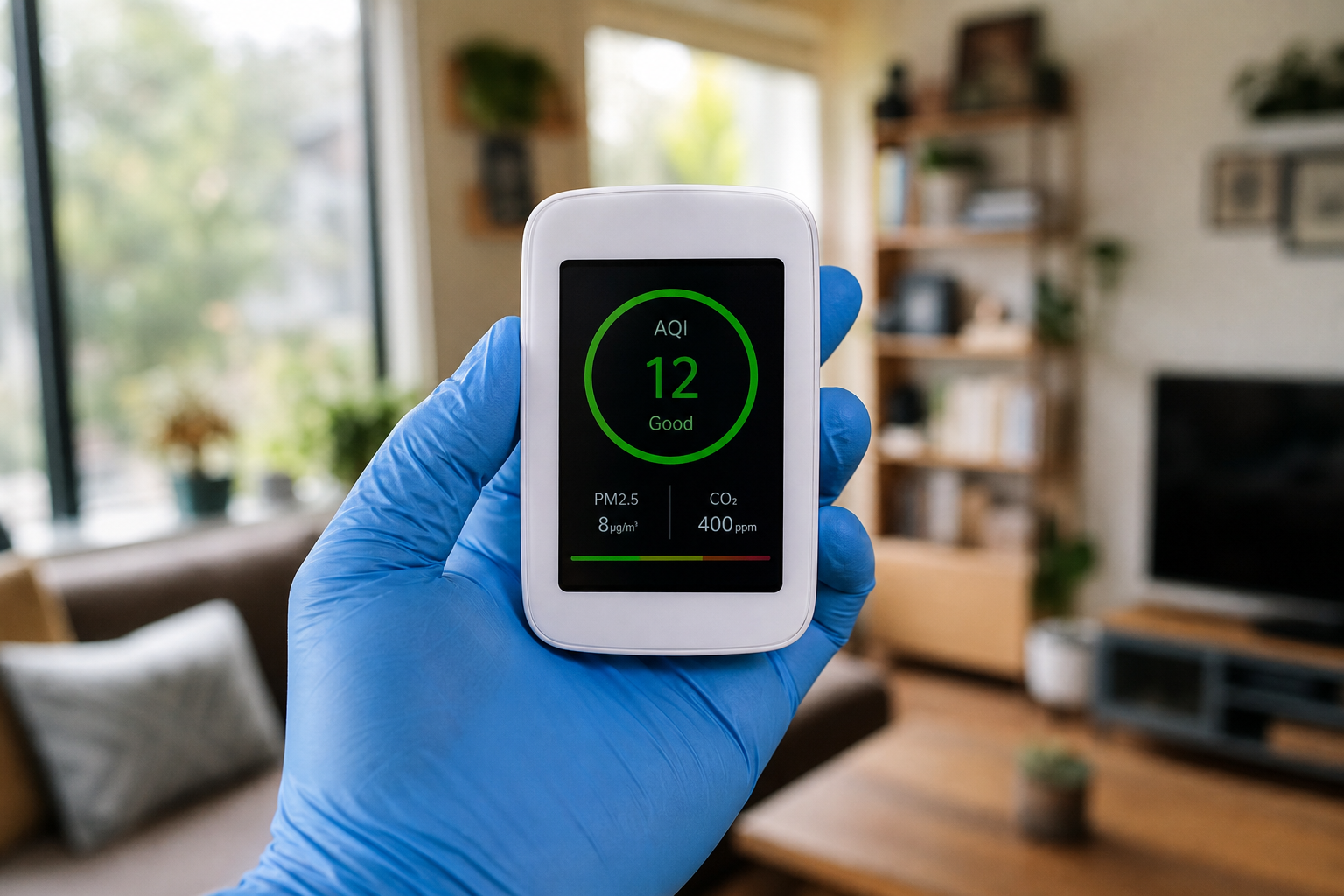
Quick Summary
While standard HVAC maintenance often fails to address deep-seated pollutants, professional indoor air quality services focus on identifying and eliminating the root causes of contamination like wildfire ash, urban soot, and hidden mold. Pure Air Duct Cleaners serves as the premier Los Angeles specialist in this field, offering an owner-operated model that ensures high accountability and source-level restoration through HEPA-filtered technology. Property owners can resolve persistent respiratory issues and system inefficiencies by contacting Larry Torres for a free, no-obligation estimate and a professional air quality consultation today.
“`html
Indoor Air Quality Services That Fix the Source, Not Just the Symptoms
You can wipe down the counters, change the filters, and still notice the same dusty smell every time the HVAC kicks on. That usually means the problem is deeper than the surface. It may be in the ductwork, the blower, or the buildup that settles in places most homeowners never see. Addressing indoor air quality effectively matters because the real fix starts with finding what is being pulled into the system and sent back into the rooms you live in.[4]
For homeowners and property managers, the source of contamination can vary by neighborhood and building type. Wildfire ash, regional dust, urban soot, and dryer vent lint are not the same problem, so they should not be treated like one generic cleaning job. A sound IAQ plan, such as those provided by Pure Air Duct Cleaners, looks at where contamination is entering, where it is recirculating, and what needs to be corrected first.
Promotional content: Pure Air Duct Cleaners offers owner-on-site service, HEPA-filtered equipment, and transparent pricing. Contact Larry Torres for a free, no-obligation estimate and professional air quality consultation.
Indoor Air Quality Services: What You Need to Know First
Indoor air quality refers to the quality of the air in a home, school, office, or other building environment. If the goal is to improve it, you have to look at both the pollutants present and the path they take through the building. That is why indoor air quality services should be based on the source of the problem, not a one-size-fits-all checklist.[3]
The U.S. Environmental Protection Agency notes that indoor concentrations of some pollutants have increased in recent decades because of energy-efficient building construction with insufficient mechanical ventilation, along with more synthetic building materials, furnishings, personal care products, pesticides, and household cleaners. In plain terms, tighter homes can trap more of what you do not want to breathe.[1]
For homeowners comparing air duct cleaning and sanitizing services, the difference comes down to whether the work addresses the source or just the symptom. Professional indoor air quality testing cost figures vary; approximate market estimates from third-party sources suggest a range of roughly $303 to $610, with a midpoint around $439, though actual pricing will depend on location, provider, and scope of work.[2]
| Service Approach | Primary Focus | Value Impact |
|---|---|---|
| Superficial Cleaning | Masks odors, basic vacuuming | Lower initial cost, but recurring issues possible |
| Source-Level Restoration | Removes debris, targeted duct sanitizing | Higher upfront cost, potential for longer-term relief |
How Can You Tell If Your Home Has Poor Indoor Air Quality?
You can tell your home has poor indoor air quality if dust comes back quickly after cleaning, if there is a musty or smoky odor, or if allergy symptoms seem worse indoors. Uneven temperatures and a dryer that takes too long to finish a load are also common warning signs. These are often clues that the HVAC system is moving dust, moisture, or lint through the building instead of removing it.
Usually the most effective way to improve indoor air quality is to eliminate individual sources of pollution or to reduce their emissions.
Five Symptoms That Point to Specific System Failures
When the same issues keep showing up, the system itself is usually part of the problem. Here is how the symptom often maps to the source:
- Persistent dust: Dust settling shortly after cleaning can point to leaky or contaminated ductwork.
- Musty odors: A damp smell often suggests hidden moisture and possible mold inside ducts, which may call for duct sanitizing after cleaning.
- Uneven temperatures: Rooms that never get comfortable may have clogged, disconnected, or restricted HVAC pathways.
- Slow-drying clothes: A dryer taking too long usually means the vent is clogged with lint, which is also a fire hazard.
- Allergy flare-ups: Unexplained respiratory symptoms can happen when pollutants keep recirculating through the home. The National Institute of Environmental Health Sciences says short- and long-term exposure to indoor air pollution can contribute to respiratory diseases, heart disease, cognitive deficits, and cancer.
If two or more of these issues are happening together, the problem is often system-wide rather than isolated to one room.
Common Contamination Sources Homeowners Overlook
Different buildings pick up different contaminants. These may include dust entering through gaps in the building envelope, mold tied to moisture intrusion, pest debris, wildfire residue, or soot from nearby traffic and construction. The age of the building matters too, as older and newer structures can have very different air movement patterns and contamination sources.
Sometimes the cause is not even inside the living space itself. In one documented office case study, sewer gas intrusion was traced to HVAC condensate pipes that lacked P-traps; once P-traps were installed, the issue was resolved. That case illustrates why a real diagnosis starts with tracing the source rather than guessing based on the smell alone.
What Is Included in a Professional Indoor Air Quality Inspection?
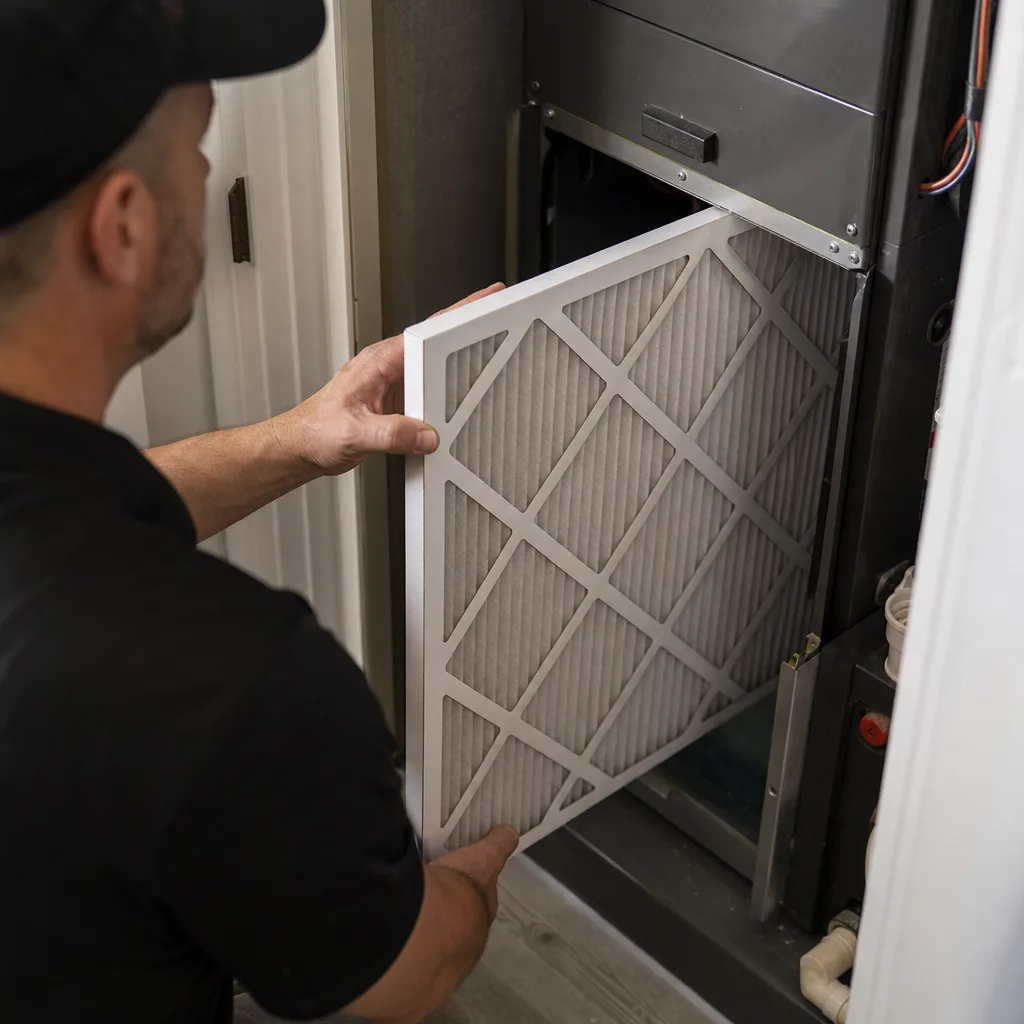
A professional indoor air quality inspection, like the ones conducted by Pure Air Duct Cleaners, should do more than look at a vent and say the system is dusty. It should include a visual assessment of accessible ductwork, airflow checks at the registers, contamination source identification, dryer vent condition review, and a look at HVAC filter performance and overall system operation.
The Difference Between a Checklist Walk-Through and a Source-Control Assessment
Not every provider approaches the job the same way. Some companies do a quick walk-through and then move straight to cleaning. A better inspection looks at where pollutants are entering, where they are collecting, and whether the system is pushing them back into the occupied space. That is the difference between a basic service call and a real source-control assessment.
| Feature | Basic Walk-Through | Source-Control Assessment |
|---|---|---|
| Diagnostics | Visual vent check | Interior camera inspection |
| Focus | Surface dirt removal | Contaminant entry points |
What to Expect During a Thorough Home Air Quality Evaluation
A careful home air quality inspection should give you clear answers, not a vague report. The process generally includes:
- Camera Inspection: Checking duct interiors for hidden debris, buildup, and signs of contamination.
- Airflow Testing: Looking for leaks or restrictions that let outside air or contaminants move through the system.
- Remediation Planning: Recommending the next steps, such as targeted duct sanitizing, so you know what work is actually needed.
- Equipment Staging: Using HEPA-filtered vacuum systems to capture particulate instead of spreading it around.
That kind of inspection helps you spend money on the real problem instead of paying for work that only looks thorough.
Do Air Duct Cleaning and Sanitizing Services Actually Improve Air Quality?
They can, but only when the work is done as source control. If the ducts are full of debris, embedded dust, pest residue, or visible mold growth, cleaning can make a meaningful difference because it removes what the system keeps recirculating. A surface wipe-down will not do that.
When Duct Cleaning May Make a Meaningful Difference
Duct cleaning is often most useful after renovation, after a water issue, or in homes that have never had the system cleaned. It can also help when there is visible contamination inside the ductwork or when a dryer vent is packed with lint. The EPA notes that energy-efficient construction with limited ventilation can trap more contaminants indoors, which is why source control, cleaning, and ventilation should be considered together rather than as separate issues.[5]
Promotional content: Pure Air Duct Cleaners uses Rotobrush mechanical agitation paired with HEPA-filtered vacuum systems on every job.
Air Purification vs. Air Filtration: Which Approach Solves Your Problem?
Once the ducts and vents are clean, the next step is deciding how you want to keep the air cleaner over time. Filtration and purification do different jobs, and neither one replaces source control.
| Feature | Air Filtration | Air Purification | Duct Sanitizing |
|---|---|---|---|
| Target Pollutants | Particulates (dust, debris) | Gases, VOCs, viruses | Residual bacteria, mold |
| Mechanism | Passive capture (HEPA) | Active destruction (UV) | Chemical neutralization |
| Addresses Odors | ✗ | ✓ | ✓ |
| Best Timing | Continuous | Continuous | Immediately post-cleaning |
Filtration captures particles like dust and dander. Purification targets gases and some biological contaminants. Duct sanitizing is used after mechanical cleaning when the goal is to address leftover odor-causing contamination or microbial residue. Sanitizing on its own is not a substitute for removing the dirt first.
How Much Do Indoor Air Quality Services Cost?
Costs vary based on the size of the home, the number of vents, how much contamination is present, and whether the job includes testing, duct cleaning, dryer vent cleaning, or sanitizing. The cost figures cited here are approximate market estimates from third-party sources and are not universal pricing; testing is often estimated in a range of roughly $303 to $610, with a midpoint around $439, but actual costs will differ by provider and region. If a quote seems unusually low for a whole-home service, that is usually a sign to ask more questions.
How to Spot Bait-and-Switch Pricing Before You Book
Low teaser pricing is still common in this industry. A provider may advertise a very low starting rate, then add charges once they are already in the house. Before booking, it helps to keep a few simple rules in mind:
- Be cautious of extreme lowball offers: Very low advertised rates for whole-home cleaning are often a starting point for upselling once the provider is on site.
- Request an upfront assessment: A legitimate provider should base pricing on the actual system size and condition.
- Require firm, transparent quotes: Ask for clear pricing before work begins so you are not stuck with surprise fees.
In most homes, the right price is the one that matches the actual scope of work. A small unit with light dust buildup is not the same job as a large property with heavy contamination, damaged ductwork, or a clogged dryer vent.
Frequently Asked Questions About Indoor Air Quality Services
Indoor air quality questions usually come down to timing, cost, and what kind of service will actually help. Here are the basics homeowners ask most often.
- How much do professional indoor air quality services cost? Approximate market estimates from third-party sources suggest testing may range from roughly $303 to $610, with a midpoint around $439, though actual costs vary by provider and location. Cleaning and sanitizing costs depend on the size of the home and the condition of the system.
- What is included in a home air quality inspection? A proper inspection should include a visual look at ductwork, airflow checks, contamination source identification, dryer vent evaluation, and HVAC filter review.
- How can I tell if my home has poor air quality? Look for dust that returns quickly, musty or smoky odors, uneven temperatures, slow-drying laundry, and allergy symptoms that get worse indoors.
- Do air duct cleaning services actually improve indoor air quality? They can, especially when the issue is built-up debris, mold, or pest contamination in the duct system. The work has to address the source, not just the visible dust.
- What are the most effective ways to remove allergens from indoor air? Source control, HEPA filtration, regular HVAC air filter replacement, proper ventilation, and moisture management work best together, consistent with EPA and NIEHS guidance.
- How often should I schedule air quality testing for my home? Once a year is a reasonable starting point, and sooner if you have new symptoms, recent renovations, water damage, or persistent odors.
- What is the difference between air purification and air filtration? Filtration captures particles. Purification targets gases and some biological contaminants. Neither one replaces cleaning the source of the problem.
Promotional content: Contact Larry Torres at Pure Air Duct Cleaners today for a free, no-obligation estimate and a professional consultation.
“`
Sources
- Indoor Air Quality | US EPA – epa.gov
- United States Indoor Air Quality Market Report 2025 – Business Wire – businesswire.com (2029)
- Water & Air Quality Testing Services in the US Industry Analysis, 2025 – ibisworld.com (2030)
- 2025 GPS Air Indoor Air Quality Perception Report – gpsair.com (2025)
- As Americans Spend More Time Indoors, Air Quality Is … – facilitiesmanagementadvisor.com (2025)
About the author
 |
Sarah Jenkins Sarah is a certified HVAC technician and indoor air quality specialist with over a decade of experience serving the Los Angeles area. She holds a B.S. in Environmental Science from UCLA and has dedicated her career to educating homeowners on the importance of duct maintenance and system efficiency. Her writing focuses on practical, cost-effective solutions for improving residential air quality and extending the life of HVAC systems. |
Dusty vents or weak airflow at home?
We’re available now — call for a fast, free estimate.
Call Now - Free EstimateNeed Air Duct Cleaning Help?
Call Pure Air Duct Cleaners — licensed & insured, here with fast after-hours help in West Hollywood.
(844) 734-2955